
2008- Kunst Beeld – ‘Broken Landscapes’
..Orna Wertman does it differently. She goes back to the ‘old’ device of the collage to mislead the eye. She creates landscapes which are familiar at first sight, but which don’t seem to be ‘right’ when you take a second look at them. It’s always about two situations in the landscape which are combined to one image. In this way, compositions come into being, which, at one time, refer to the ‘classical’ composition, but which are more often shaped into an image (that is to a certain extent homogenous) in which an apocalyptical component is present. These are landscapes which seem desolate and barren, unmanageable and also somewhat threatening. These are the sort of subtle and metaphorical components that demand not only a second look at Orna Wertman’s collages, but also a third one.
– Robbert Roos
Enjoy the finest
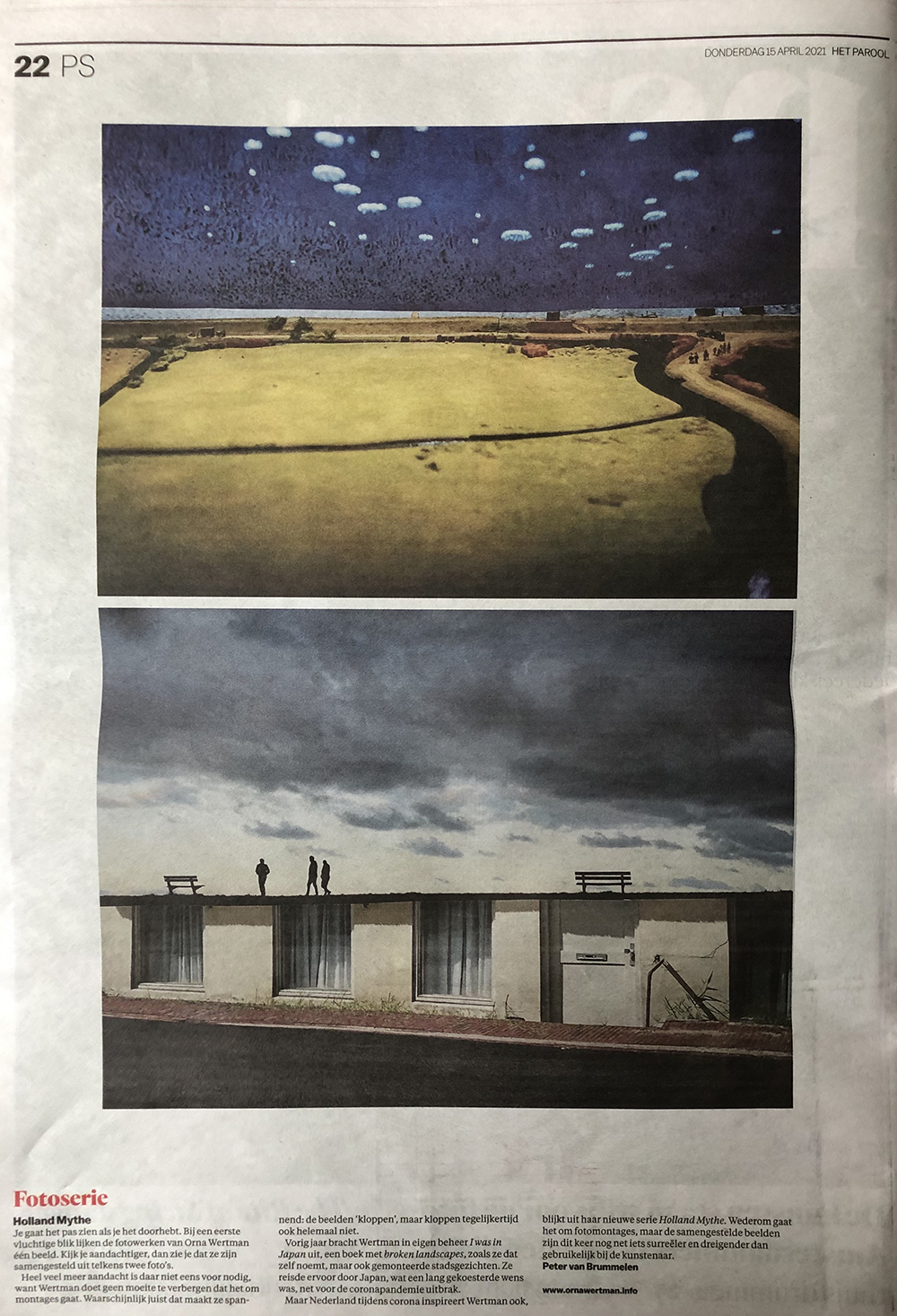
Holland Myth
A travel in The Netherlands during Corona 2020
Endless voids.
Squares with abandoned toys.
Second lockdown in Amsterdam
(winter 2021)
Bizarre and surreal year.
read more
Text: Beatrice von Bormann, curator of modern art, Stedelijk Museum Amsterdam
Peggy Brandon, Japanologist, former director of Sieboldhuis
ISBN 978-90-814085-8-5
32 p. Edition 255
Special Edition 15 – signed & numbered
Added 2x photo leporellos at the back.

I was not in Japan
Parool Art & Media 5/4/2019
There is no bigger Japanese cliché than blooming cherry trees. No bigger cliché, but also no symbol or image to better express the desire for Japan..
read more
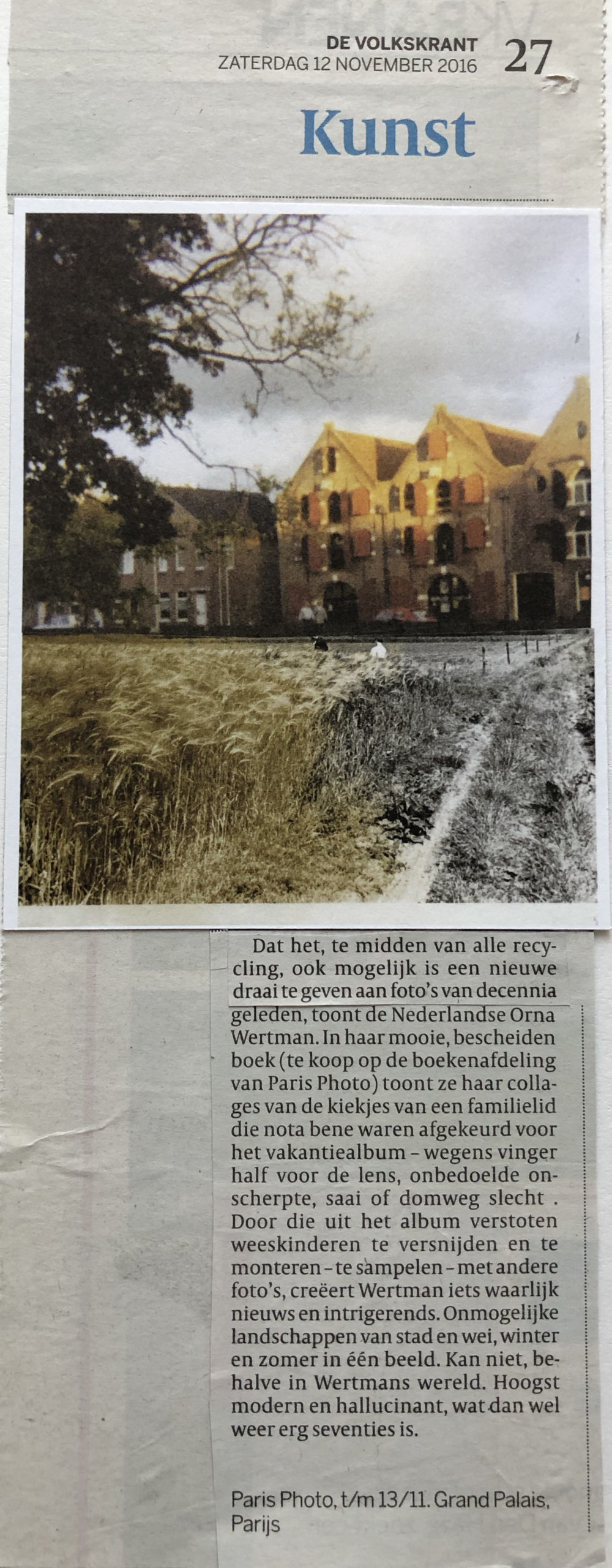
Other Vacations
Volkskrant review, Paris Photo 12/11/2016
..Amidst all the recycling it is possible to give a new twist to photos of decades ago. The Dutch artist Orna Wertman shows this in her beautiful
read more
The Day the Earth Shakes
Best Photobooks of 2017: the selection of Dutch newspaper De Volkskrant
After Broken Landscapes and Bird Lands, Orna Wertman is back with a new
read morePublications
1990 Catalogue: ‘Monòlegs’, Espais Art Centre, Girona
1992 Kunst Beeld
ca. ‘Beeldend Nederland 1880- 1992’
ca. ‘Desert Flowers’, Dorus Rijkers Museum, Den Helder
1994 Catalogue: ‘Paintings – Puzzles – Models – Photo
collages’, museum De Beyerd, Breda
De Telegraph
ca. ‘Beek in Beeld’, art manifestation, Onstwedde
De Volkskrant
ca. ‘The Sense that something has disappeared’,
Gallery of Art, Haifa University, Haifa
1999 De Telegraph
2000 De Volkskrant
2002 Catalogue: ‘Photography, Airplanes & Sheep’, museum De Beyerd, Breda
Kunst Beeld
2003 FreeEye Magazine
Wall Paper
2004 www.ornawertman.info
TIME Magazine, Art room ‘PuzzleView’ (503),
Winston Hotel, Amsterdam
2005 Parool, Adformatie magazine
2007 PhotoQ
2008 Kunst Beeld
‘Sheep & Airplanes’ 2006-2008
‘Broken Landscapes’ 2003-2008
‘Totems & Wrecks’
‘’80-Early ‘90’ ‘Ghost Grounds’
2009 ‘Broken Landscapes’ (ed. 500)
‘Ghost Grounds’ ‘
2010 ‘QUICKSCAN NL# 01- Photography Now’
NRC
Eindhovens Dagblad
‘Venice in Snow’
‘Blue Mountains
2011 ‘December 2010’
‘After Broken Landscapes’
Eindhovens Dagblad
Gup Magazine
2013 ‘Blind Sheep Fashion Show’
‘Bird Lands’
2014’ ‘Geen Rust’
‘Summer Details’
2015 ‘Other Vacations’ (ed. 500)
2016 ‘The Silvered’
De Volkskrant
See All This
2017 ‘The Day the Earth Shakes’ (ed. 175)
De Volkskrant
2019 ‘I was not in Japan’ (ed. 255)
‘Actualities’ (ed. 255)
Parool
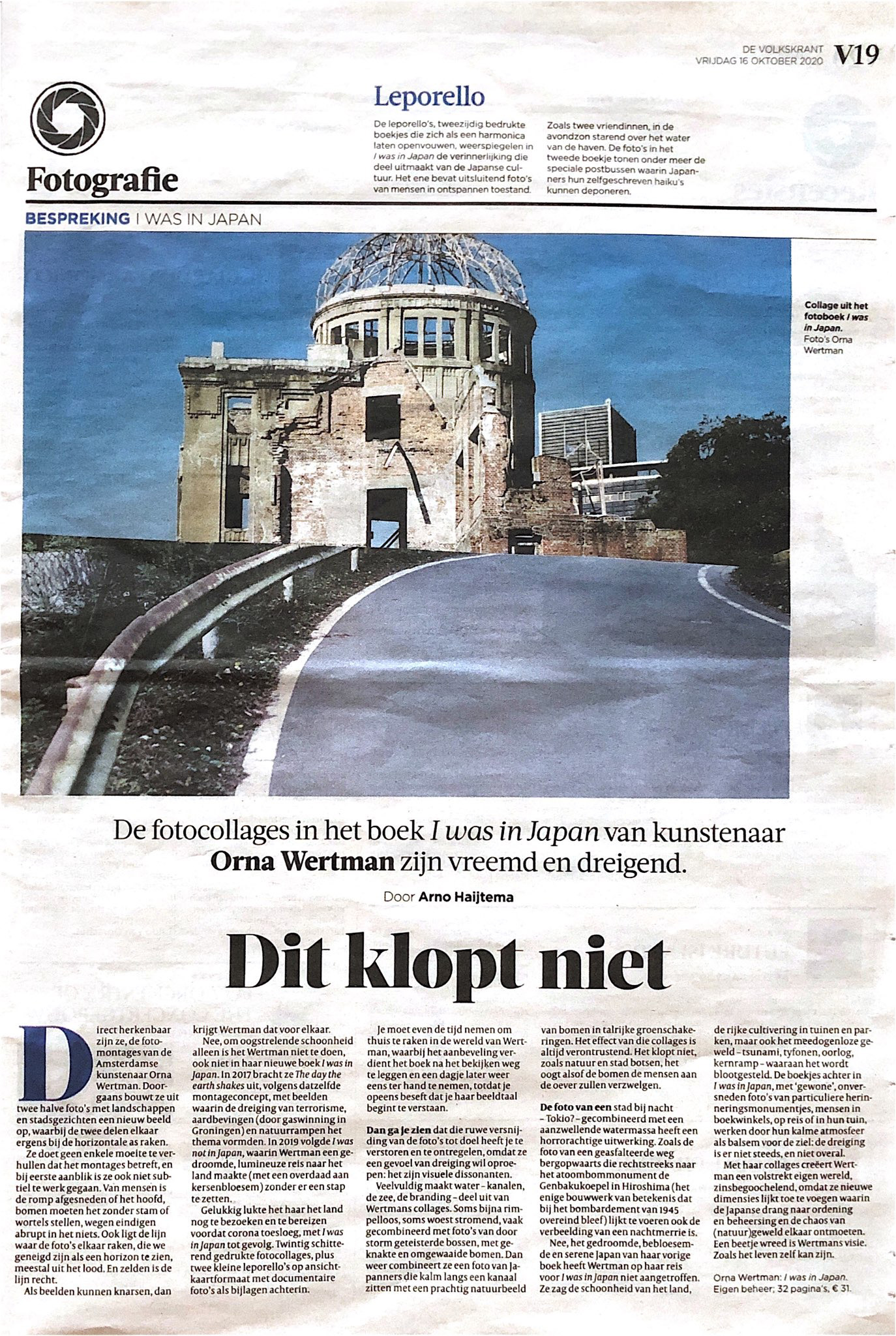
2020 ‘I was in Japan’ (ed. 255)
Het Parool
De Volkskrant
2021 ‘Holland Myth’ (ed. 255)
Het Parool